One of the remarkable aspects of the World Court’s far-reaching and erudite 2025 opinion on State obligations in respect of climate change was that all 15 Justices voted without dissent for its central determinations.
In particular, the Court, among other things:
- Unanimously assessed that the major climate change treaties “set forth binding obligations for States parties to ensure the protection of the climate system and other parts of the environment from anthropogenic greenhouse gas emissions,”
- Unanimously determined “that customary international law sets forth obligations for States to ensure the protection of the climate system and other parts of the environment from anthropogenic greenhouse gas emissions,”
- Unanimously found that State parties to the Vienna Convention, the Montreal Protocol, the Kigali Amendment, the Convention on Biological Diversity, and the Desertification Convention, retain “obligations under these treaties to ensure the protection of the climate system and other parts of the environment from anthropogenic greenhouse gas emissions,”
- Unanimously provided that State “parties to the United Nations Convention on the Law of the Sea have an obligation to adopt measures to protect and preserve the marine environment, including from the adverse effects of climate change and to co-operate in good faith,”
- Unanimously held “that States have obligations under international human rights law to respect and ensure the effective enjoyment of human rights by taking necessary measures to protect the climate system and other parts of the environment.”
It took ten months more, as I discussed in Nations United Stand Up, for the United Nations General Assembly to get round to acknowledging the ICJ’s ground-breaking climate opinion. At the same time, the vast majority of nations committed themselves to implementing its central findings, through effective climate action.
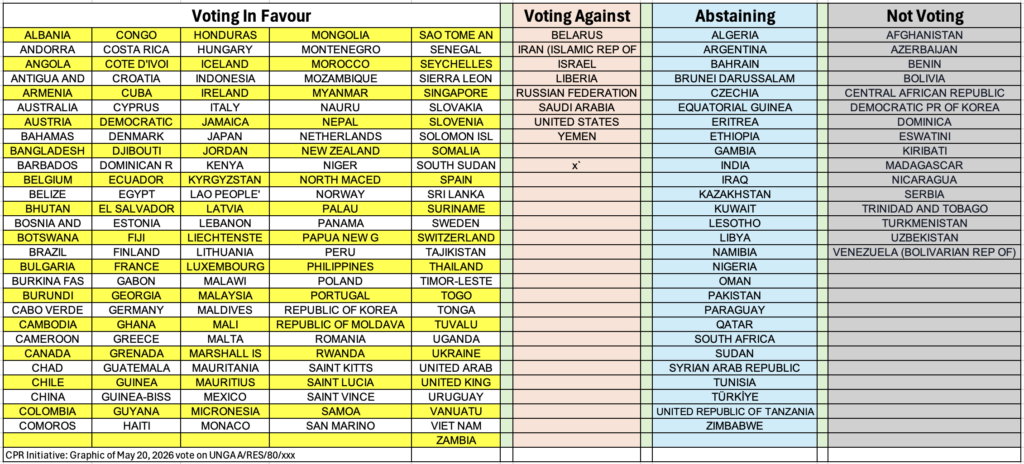
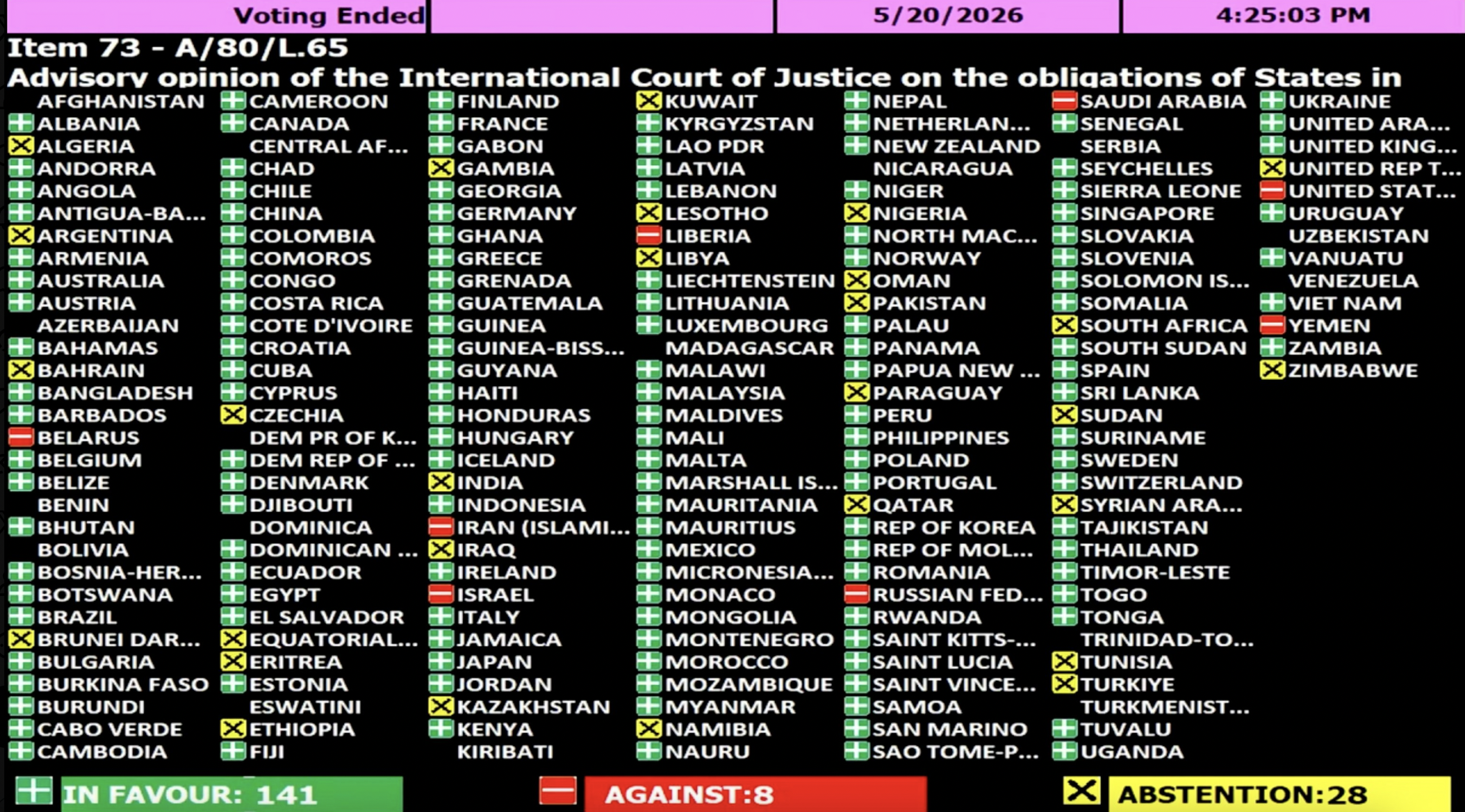
Regrettably, however, eight nations voted against the resolution. In addition, 28 nations voted to abstain while 16 States did not bother vote at all. To the extent that a near-universal commitment of nations is important to maximize chances at an effective global response to the climate crisis, these abstentions and no-shows only to amplify the problem.
For the record, we depict here the complete tally of the UNGA Vote.